Sonntag, 7. Oktober 2018

Monasterio de Piedra, Aragón, Spain

2018-09-26. The Monastery of Piedra near Nuévalos (Aragon, Spain). 
Monasterio de Piedra is located in one of the most arid regions of Spain. Its origins date back to 1194, when Alfonso II of Aragon and his wife Doña Sancha donated an old Moorish castle to the monks of Poblet for the construction of a monastery and the establishment of the Christian religion in the region.The river Piedra has allowed the development of a real oasis of greenery in these gorges. The park was built in the last century to transform a hard-to-penetrate forest into a highly visited park. We will walk for almost three hours in this fantastic park following the marked trails that guide us from a waterfall to the other.
Monasterio de Piedra. Cascada La Caprichosa

Monasterio de Piedra. En haut du canyon le Mirador de la Puerta Negra
Monasterio de Piedra. Los Vadillos.
Lago de los Patos

Monasterio de Piedra. Gruta de la Pantera.
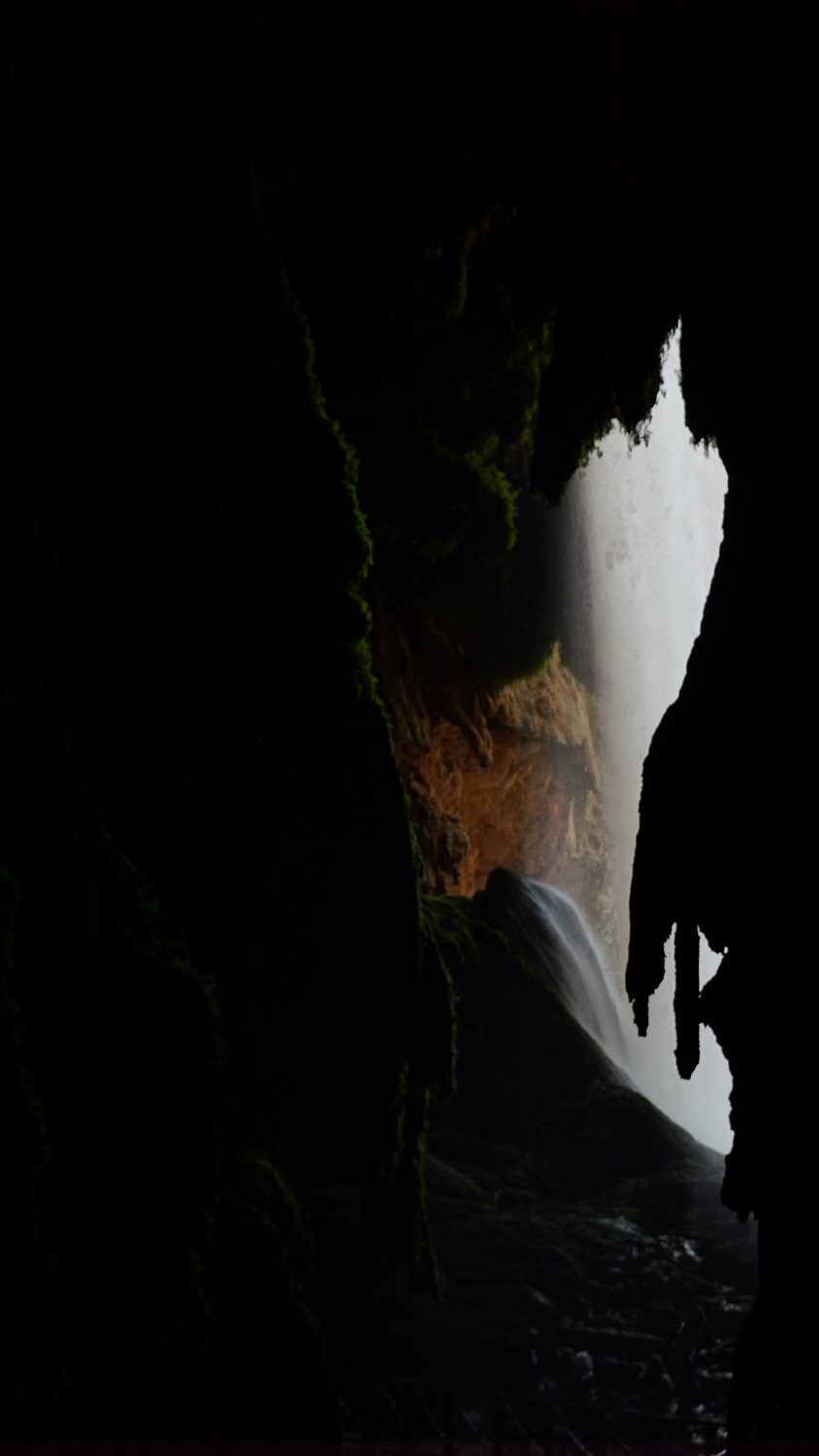
The highlight of the visit is a 53 m high waterfall, La Cola de Caballo (the horse tail), the foot of which we can reach from the summit by a tunnel dug into the rock. This tunnel leads us in 165 steps to a large cave behind the falls (the cave of Iris). 


Monasterio de Piedra. The waterfall « Cola de Caballo » from the top.
Monasterio de Piedra. Gruta Iris behind the waterfall « Cola de Caballo ».


Monasterio de Piedra. Gruta Iris behind the waterfall « Cola de Caballo ».

The waterfall "Cola de Caballo"

We also attend a presentation of raptors. A presentation unfortunately made in Spanish to which we do not understand much. Too bad because it would certainly be interesting. We are introduced to different species: Lanner falcons, Harris's hawks, variable hawks, tawny eagles, an eurasian owl ... 

Eurasian owl
Raptors introduction
Haris's hawk
Tawny eagle
Lanner falcon
Variable hawk
Eurasian owl
We end with the monastery itself: the cloister, the church in ruins, various rooms including the kitchen where it was apparently preparing the first chocolate in Spain.

Ruins of the church
Monasterio

Cloister


26 septembre 2018 : Le Monastère de Piedra près de Nuévalos (Aragón, Espagne).

Le Monasterio de Piedra est situé dans l'une des régions les plus arides d'Espagne. Ses origines remontent à 1194, lorsque Alphonse II d'Aragon et son épouse Doña Sancha firent don d'un ancien château maure aux moines de Poblet pour la construction d'un monastère et l'instauration de la religion chrétienne dans la région.


La rivière Piedra a permis le développement d’une véritable oasis de verdure dans ces gorges. Le parc a été aménagé au siècle dernier afin de transformer une forêt difficilement pénétrable en un parc très visité. Nous allons nous balader pendant presque trois heures dans ce fantastique parc en suivant les sentiers balisés qui nous guident de cascade en cascade.


Le clou de la visite est une chute d’eau de 53 m de hauteur, La Cola de Caballo (la queue de cheval), au pied de laquelle nous pouvons parvenir à partir du sommet par un tunnel creusé dans la roche. Ce tunnel nous mène en quelques 165 marches à une grande grotte derrière les chutes (la grotte d’Iris).
Nous assistons aussi à une présentation de rapaces. 


Une présentation malheureusement faite en espagnol à laquelle nous ne comprenons pas grand-chose. Dommage car ça aurait certainement été intéressant. On nous y présente différentes espèces : des faucons Lanier, des buses de Harris, des buses tricolores, des aigles ravisseurs, un grand-duc…
 

Nous finissons par le monastère lui-même : le cloître, l’église en ruine, diverses salles dont la cuisine où fut, paraît-il, préparer le premier chocolat en Espagne.


26.09.2018. Das Kloster von Piedra nahe Nuévalos (Aragonien, Spanien).Der Monasterio de Piedra liegt in einer der trockensten Regionen Spaniens. Seine Ursprünge gehen auf das Jahr 1194 zurück, als Alfons II. von Aragon und seine Frau Doña Sancha den Mönchen von Poblet eine alte maurische Burg für den Bau eines Klosters und die Errichtung der christlichen Religion in der Region schenkten. Der Fluss Piedra hat eine echte grüne Oase in diesen Schluchten entwickelt.  
Der Park wurde im letzten Jahrhundert gebaut, um einen schwer zu durchdringenden Wald in einen sehr besuchten Park zu verwandeln.  
Wir werden fast drei Stunden in diesem fantastischen Park spazieren gehen und den markierten Wegen folgen, die uns von einem Wasserfall zum anderen führen.
Der Höhepunkt des Besuchs ist ein 53 m hoher Wasserfall, La Cola de Caballo (der Pferdeschwanz), dessen Fuß vom Gipfel aus durch einen in den Fels gegrabenen Tunnel erreicht werden kann. Dieser Tunnel führt uns in 165 Schritten zu einer großen Höhle hinter den Wasserfällen (die Höhle von Iris).
Wir besuchen auch eine Vorstellkung von Greifvögeln. Eine Präsentation leider auf Spanisch , zu der wir nicht viel verstehen. Schade, weil es sicherlich interessant gewwesen wäre. Uns wurden verschiedenen Arten vorgestellt: Lannerfalken, Wüstenbussards (Harris's hawk),
Rotrückenbussard (variable hawk), Raubadler (Tawny Eagles), Uhu (eurasian owl) ...
Als Abschluss besuchen wir das Kloster selbst: den Kreuzgang, die Kirche in Ruinen, verschiedene Räume einschließlich der Küche, wo angeblich die erste Schokolade in Spanien vorbereitet wurde.


Andorra, Estany de Ransol

2018-09-23: Mountain hiking to estany de Ransol (Ransol Pond) at 2500 m.

The Principality of Andorra is one of the smallest states in the world. 464 km2 and approx. 80,000 inhabitants. It is in fact a co-principality, a legacy of the feudal era, the heads of state being the Bishop of Urgel and the President of the French Republic. The official language is Catalan but Spanish and French are very widely spoken. Andorra la Vella is, at 1023 m above sea level, the highest capital of Europe.One of the pillars of the Andorran economy is tourism, to which the absence of VAT gives an extra boost. People come willinglyfor shoping there.The average altitude is 1997 m. In other words, it is the high mountains that dominate the landscape. 

We will take full advantage of it by a geocaching hike of 9km which will take us from 1950 m at the start to a little more than 2500 m of altitude. A long climb following the course of a torrent that runs down the slope in a multitude of beautiful waterfalls. 


Wild little mountain lakes at the top of the course.  


 Stunning views of the surrounding peaks and valleys.  


And 30 geocaches as a reward for our efforts.

23 septembre 2018. Randonnée de montagne en principauté d’Andorre.
 

La principauté d’Andorre est un des plus petits états du monde. 464 km2 et env. 80 000 habitants. Il s’agit en fait d’une coprincipauté, un héritage de l’époque féodale, les chefs d’état étant l’évêque d’Urgel et le président de la république française. La langue officielle est le catalan mais l’espagnol et le français y sont très couramment parlés. 
Andorre la Vieille est, à 1013 m d’altitude, la capitale d’Europe la plus élevée.
Un des piliers de l’économie andorrane est le tourisme à qui l’absence de TVA donne une impulsion supplémentaire. On y vient volontiers faire ses emplettes.
L’altitude moyenne est de plus de 1900 m. Autant dire que c’est la haute montagne qui domine le paysage.
Nous allons en profiter pleinement par une randonnée géocaching de 9km qui va nous mener de 1950m au départ à un peu plus de 2500 m d’altitude.

Une longue grimpette en suivant le cours d’un torrent qui dévale la pente en une multitude de belles cascades. 
De sauvages petits lacs de montagne au sommet du parcours. 
Des vues superbes sur les sommets et vallées environnantes. 
Et 30 géocaches en récompense de nos efforts. 


2018-09-23: Bergwanderung nach Estany de Ransol auf 2500 m.
Das Fürstentum Andorra ist einer der kleinsten Staaten der Welt. 464 km2 und ca. 80.000 Einwohner. Es ist in der Tat ein Co-Fürstentum, ein Vermächtnis der Feudalzeit, die Staatsoberhäupter sind der Bischof von Urgel und der Präsident der Französischen Republik. Die offizielle Sprache ist Katalanisch, aber Spanisch und Französisch sind sehr weit verbreitet. Andorra la Vella ist mit 1023 m über dem Meeresspiegel die höchste Hauptstadt Europas.Eine der Säulen der andorranischen Wirtschaft ist der Tourismus, zu dem das Fehlen vom Mehrwertsteuer einen zusätzlichen Impulse gibt. Die Leute kommen gern, um hier einzukaufen.Die durchschnittliche Höhe beträgt 1997 m. Mit anderen Worten dominieren die hohen Berge die Landschaft.

Wir werden es mit einer Geocaching-Wanderung von 9 km ausnutzen, die uns von 1950 m am Start bis auf etwas mehr als 2500 m Höhe führt.  
Ein langer Aufstieg folgt dem Verlauf eines Wildbachs, der in einer Vielzahl von wunderschönen Wasserfällen den Hang hinabläuft. Wilde kleine Bergseen an der Spitze der Tour.Atemberaubende Ausblicke auf die umliegenden Gipfel und Täler.Und 30 Geocaches als Belohnung für unsere Bemühungen. 

Tarascon Sur Ariège

2018-09-22: Stopover in Tarascon Sur Ariège. A picturesque small city in the Ariège Valley.

Tarascon Sur Ariège is a small town, or a large village, of 3500 inhabitants founded in the 8th century after a victory of Charlemagne over the Saracens.
The lower city is rather industrial and seems much less attractive than the upper town, once fortified and leaning against a hillock surmounted by a round tower.

We therefore opt for this part of the city for our short visit.
Tarascon-sur-Ariège. Gandalf at the upper town.
 
The tour of the upper town is quick but we appreciate the calm and the serenity.
Our visit leads us first to the Saint Michel Tower, originally a church of which only the bell tower remains, which was part of the fortifications.


Tarascon-sur-Ariège. The Saint-Michel Tower.

Then we head to the Tower of Castella, a round tower built in the late eighteenth century on the site of the old feudal dungeon and has become the emblem of the city.
Tarascon-sur-Ariège. The "Tour du Castella"
 
After a little loitering in the narrow streets of the upper town we take again the road to the Principality of Andorra.
Tarascon-sur-Ariège. In the upper town.


22/09/2018: Escale à Tarascon-sur-Ariège. Une petite ville pittoresque de la vallée de l'Ariège.

Tarascon Sur Ariège est une petite ville, ou un gros bourg, de 3500 habitants fondé au VIIIème siècle après une victoire de Charlemagne sur les Sarrasins.
La ville basses est plutôt industrielle et semble bien moins attrayante que la ville haute, autrefois fortifiée et qui s'adosse à une butte surmontée d'une tour ronde.
Nous optons donc pour cette partie de la ville pour notre courte visite.
Le tour de la ville haute est vite fait mais nous y apprécions le calme et la sérénitude.
Notre visite nous mène d'abord à la Tour Saint Michel, à l'origine une église dont il ne reste que le clocher qui fit partie des fortifications.
Ensuite nous nous dirigeons vers la Tour du Castella, une tour ronde construite à la fin du XVIIIème siècle sur l'emplacement de l'ancien donjon féodal et qui est devenue l'emblème de la cité.
Après avoir un peu flané dans les ruelles étroitess de la ville haute nous reprenons la route de la Principauté d'Andorre. 


22.09.2018: Zwischenstopp in Tarascon Sur Ariège. Eine malerische kleine Stadt im Ariège-Tal.Tarascon Sur Ariège ist eine kleine Stadt, oder ein großes Dorf, mit 3500 Einwohnern, das im 8. Jahrhundert nach einem Sieg Karls des Großen über die Sarazenen gegründet wurde.Die untere Stadt ist eher industriell und scheint viel weniger attraktiv als die obere Stadt, einst befestigt und an einen Hügel gelehnt, der von einem runden Turm überragt wird.Wir entscheiden uns daher für diesen Teil der Stadt für unseren kurzen Besuch.Die Besichtigung der Oberstadt ist schnell, aber wir schätzen die Ruhe und die Gelassenheit.Unser Besuch führt uns zuerst zum Turm Saint-Michel, ursprünglich eine Kirche, von der nur der Glockenturm übrig geblieben ist, der Teil der Befestigungsanlagen war.
Weiter geht es zum Turm von Castella, einem runden Turm, der Ende des 18. Jahrhunderts an der Stelle des alten Feudal Bergfrieds erbaut wurde und zum Wahrzeichen der Stadt wurde.Nach ein wenig Herumlungern in den engen Gassen der Oberstadt nehmen wir wieder die Straße Richtung Andorra.